The mystery of concrete
The origin of the stereo from “Heathers” + new music from the recent past

The summer/fall 2026 playlist: a heavy hit of ambient dub, some surprise (to me, anyway) chamber pop, plus exploratory dronework and orchestras and things in between. / 3 hrs 29 mins
Listen at: Buy Music Club / Deezer
Export to: Spotify / YouTube Music / Apple Music
Last weekend I saw John Wilson’s The History of Concrete, the comedy/documentary that’s a little bit about concrete, but more about building things and what happens when those things inevitably fall apart, whether it’s the Brooklyn-Queens Expressway, a relationship, or the movie’s funding. It’s about finding peace in the face of impermanence. (Or at least laughing about it.)
Between various explorations of concrete rot, Wilson asks people, “Do you ever think about concrete?” Often he’s met with a perplexed look and “no,” but for me the answer is “actually yes.” A few months back I was watching Heathers (1989), and in the home gym at JD’s house we see what appears to be a concrete-encased stereo receiver.
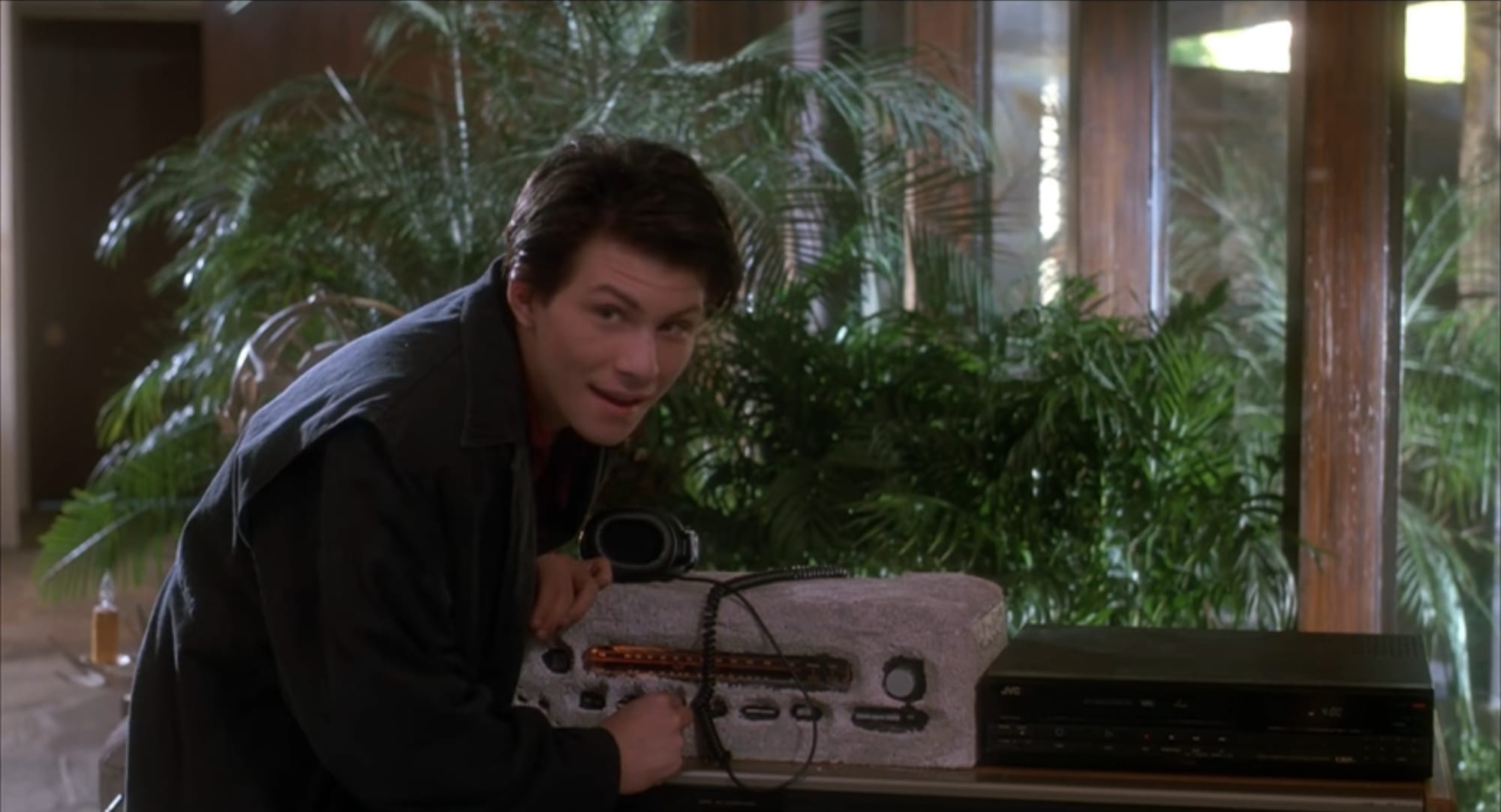
I’ve watched this movie countless times, but I’d never really stopped and thought about that receiver, which sounds strange now because it appears to be a giant rock with dials. What is it? And why don’t any of the characters mention it?
Maybe, I thought, it’s because it wouldn’t have been seen as such a remarkable object at the time. Was this a mass-market component I’d never heard about? My searches turned up nothing. Nor could I find anything about whether dipping electronic components into concrete was a popular (and seemingly difficult?) trend in the ’80s. (For what it’s worth, casting turntables out of concrete is something some DIYers are doing now.)
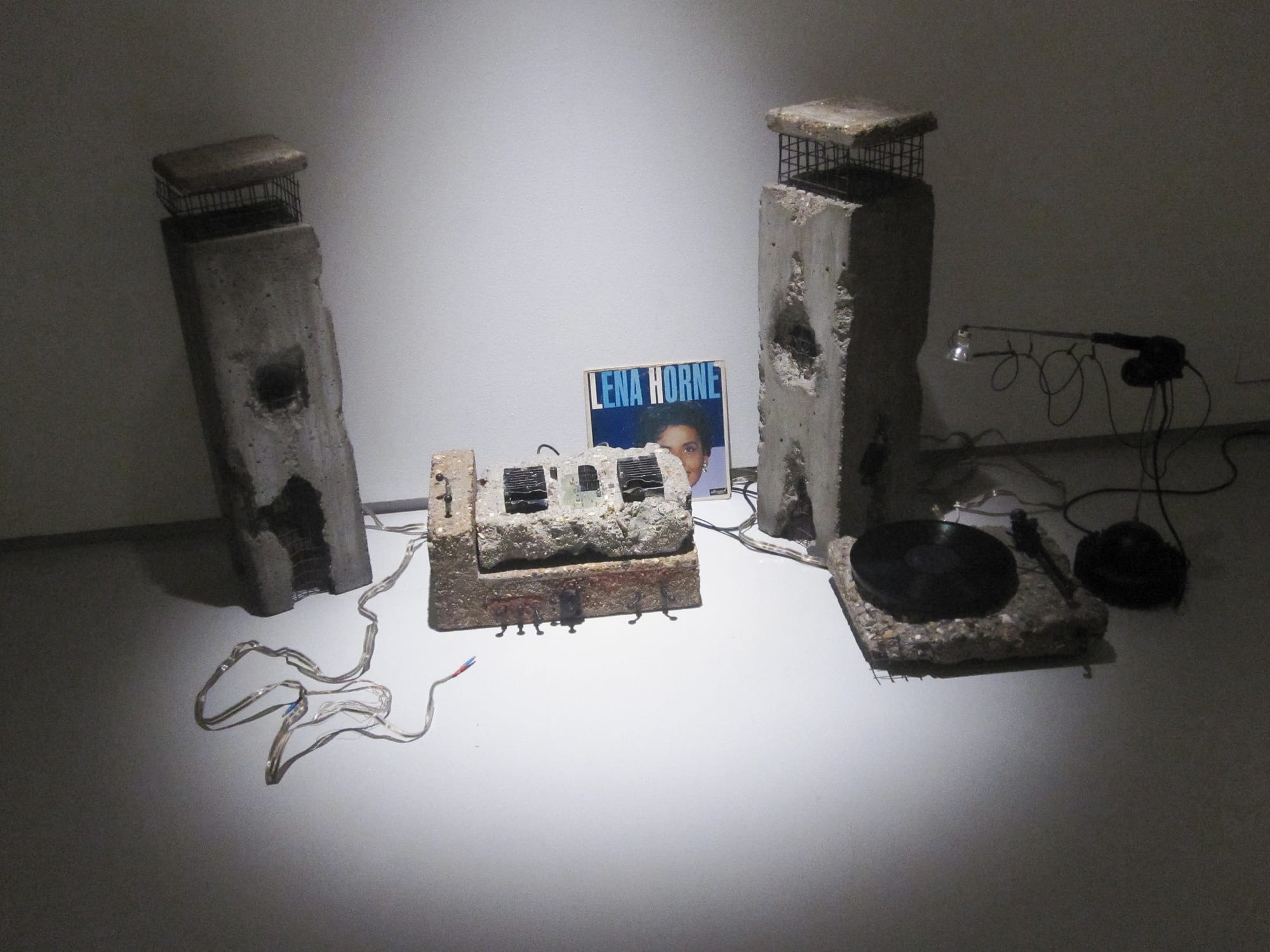
Or maybe this was an exclusive object, art perhaps? The closest relative I could find was Ron Arad’s Concrete Stereo from 1983, which isn’t so much a stereo encased in concrete as one built out of it, and has been chipped away to reveal internal rebar and electronics. It’s a similar aesthetic, but more obviously an art piece than the stereo in Heathers.
I was turning up empty, and I couldn’t believe it. But what confounded me more than the lack of information on the object was how much harder using Google to research a highly specific subject had become compared to only a few years ago. The reason is, of course, Google’s AI, which, upon every new search, refused to let me go, determined as it was to deliver another response and keep the conversation going. For example, telling me the receiver was definitely a “prop” that “looks like a junky Sanyo/Fisher from a rack system,” citing a four-message-deep forum thread from 2016. But I was looking for the answer, not conjecture.
I couldn’t tell how close I was to either a dead end or another lead. Every time I thought I’d finally exhausted my options, Google’s AI insistently spat out another answer, telling me what I wanted to hear, even if it had no way of telling me what I wanted to know.
While Google did point me to the only other person who apparently shares a fascination with this stereo, its AI also informed me—with absolute certainty—that the Heathers DVD extra How Very: The Art and Design of ‘Heathers’ explains the origin of the stereo. The answer I was looking for, I was assured, was to be found there.
It was not.
But the segment is still a worthwhile, in-depth look at the design behind Heathers, especially the interviews with art director Kara Lindstrom, who seemed like the person who would know the most about the stereo. I reached out, and Lindstrom put me in touch with Ellen Totleben, the movie’s set decorator, who had the answer: “The stereo was indeed fabricated. It was made out of spray foam and styrofoam using planes and reciprocating saws to sculpt it.”
“It was too fragile to stack anything on it, like albums or tapes.”
And what about the receiver? What was hiding under all that foam? “I got the guts from a place that has broken-down components of everything electronic. It didn’t work. So the music was on a track.”
There we go. A prop made by the art department, not real concrete at all. Finally, the answer. But still, something bothered me.
Using the internet—which in many ways has become synonymous with googling—has long been about hunting down information, and often finding it almost instantly. But that didn’t happen here. I can be fine with not finding an answer, but Google was unwilling to give me even that.

At one point in The History of Concrete, Wilson travels to Rome, where concrete is believed to have been perfected. The original Roman recipe is reputedly lost to time, but its durability is quite apparent just by looking at the Pantheon (AD 126).
Yet even in Rome, surrounded by examples of ancient concrete that’s still standing, Wilson gets pretty much the same answer when he asks people if they ever think about concrete: not really.
Why don’t we think about concrete? Maybe it has something to do with the concrete of the past, when it was more durable than what we’re pouring today. We don’t think about it because we believe it’s permanent, it’s a fixture, even as much of it crumbles around us.
The internet is much the same way, a digital archive we were led to believe would exist forever, that once something is on the internet it never dies. And yet the cracks are getting deeper, and the companies that made the internet what it is today have little interest in repairing the damage—and worse, are actively trying to pull us down into the rubble.
Klein at NTS
Following Klein on Bandcamp is a stream-of-consciousness experience, approached more like a musical journal than a strategized sequence of releases leading to a commercial endpoint. So it’s always a surprise to me when an album bubbles up, like My Own Fairytale [Bandcamp], a pastiche of beautiful ideas wrapped in an ambient sheen.
On the more provocative side of her body of work, though, is this recent mix at NTS, where she “presents an anti-bullying PSA built from original compositions, live edits, observations and rehearsal recordings.”
 NTS Radio